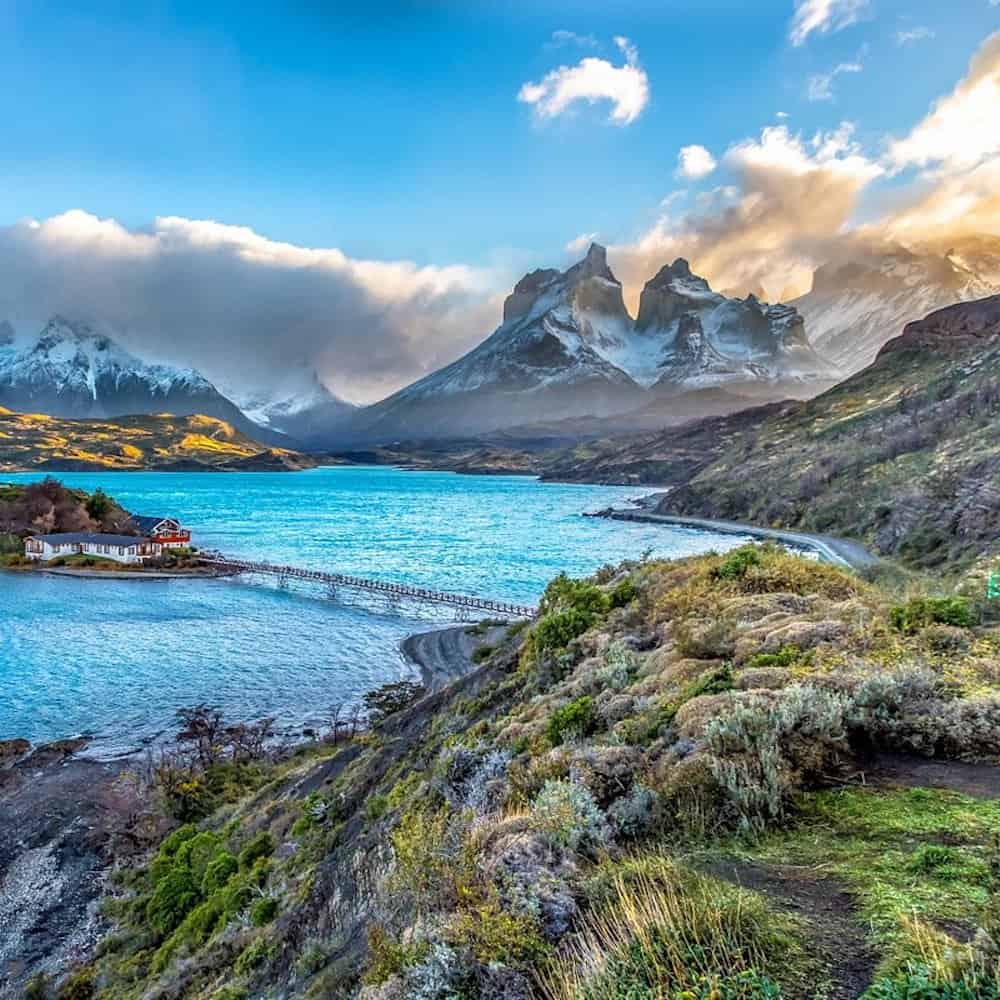
Declared a Biosphere Reserve by UNESCO’s Man and the Biosphere (MAB) Programme for its scientific interest in ecological, biological, and cultural terms, Torres del Paine National Park is one of the most pristine places in the country, boasting landscapes, flora, and fauna unique in the world. Spanning 227,298 hectares across the Magallanes and Chilean Antarctica regions, it has become one of Chile’s top tourist destinations, receiving over 300,000 visitors annually and being named the 8th Wonder of the World, competing against 330 destinations across 50 countries.
RELEVANCE
Torres del Paine National Park stands out as an interconnected web of ecosystems where mountains, glaciers, turquoise waters, wetlands, waterfalls, Patagonian steppe, native forests, and an immense variety of flora come together. This makes it a haven that protects both our natural and cultural heritage. In fact, within the park, visitors can find paleontological sites, fossils, and limestone formations that offer a glimpse into life millions of years ago, as well as archaeological sites testifying to the presence of nomadic peoples over 11,000 years ago.
FLORA
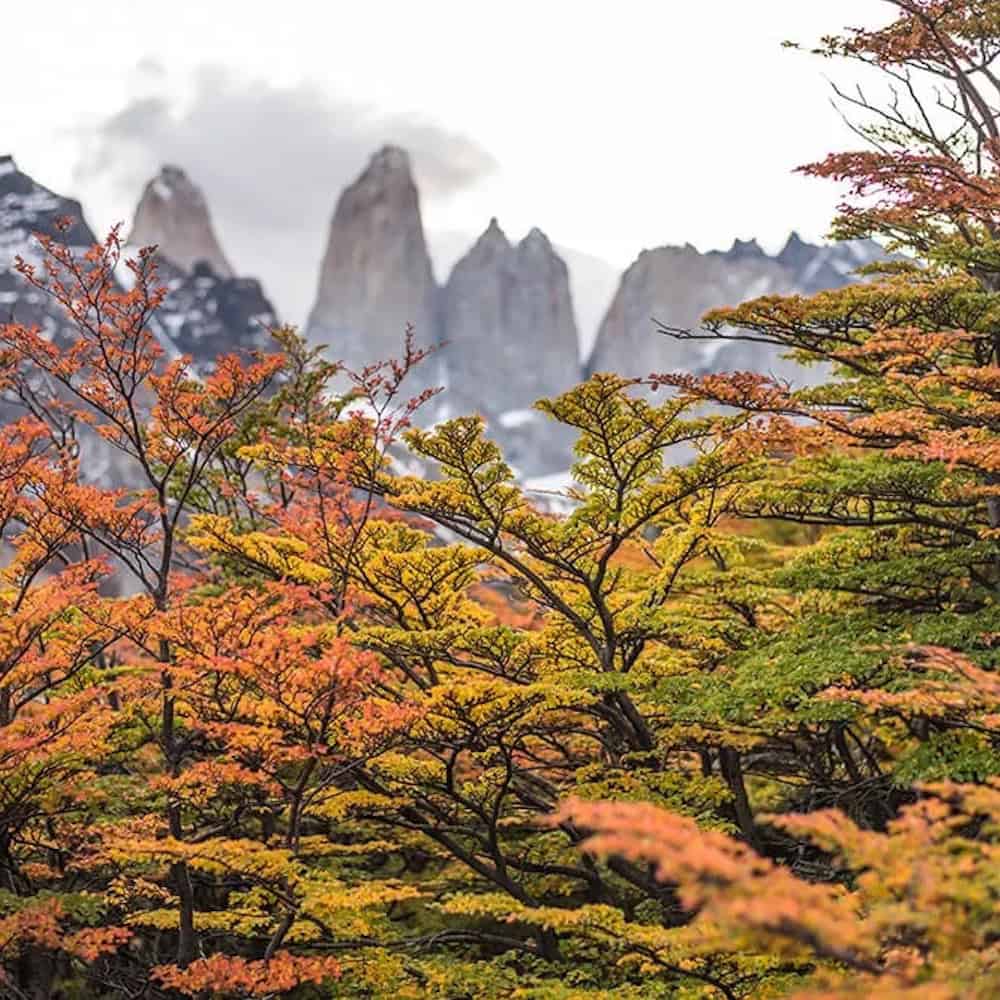
Blessed with a unique geography, its vegetation creates a seamless connectivity between forests and steppe, composed mainly of medium-height scrubland. Just as it is said that in Torres del Paine National Park you can experience all four seasons in a single day, it is also possible to observe a flora as varied as its climate, featuring four vegetation types: – Pre-Andean scrubland, which covers most of the park’s area, found on plateaus and plains.-Bosque magallánico deciduo compuesto por las comunidades arbóreas, mayormente por la Lenga (Nothofagus pumilio). -Estepa Patagónica que cubre llanuras y mesetas en la región. Caracterizada por la presencia de arbustos postrados, cojines de plantas y pastizales. -Desierto Andino que corresponde a todos los territorios que, por efecto de las condi- ciones climáticas determinadas por la altitud, tienen una vegetación carente de árboles y arbustos altos. Las plantas viven gran parte del año en receso vegetativo.
FAUNA
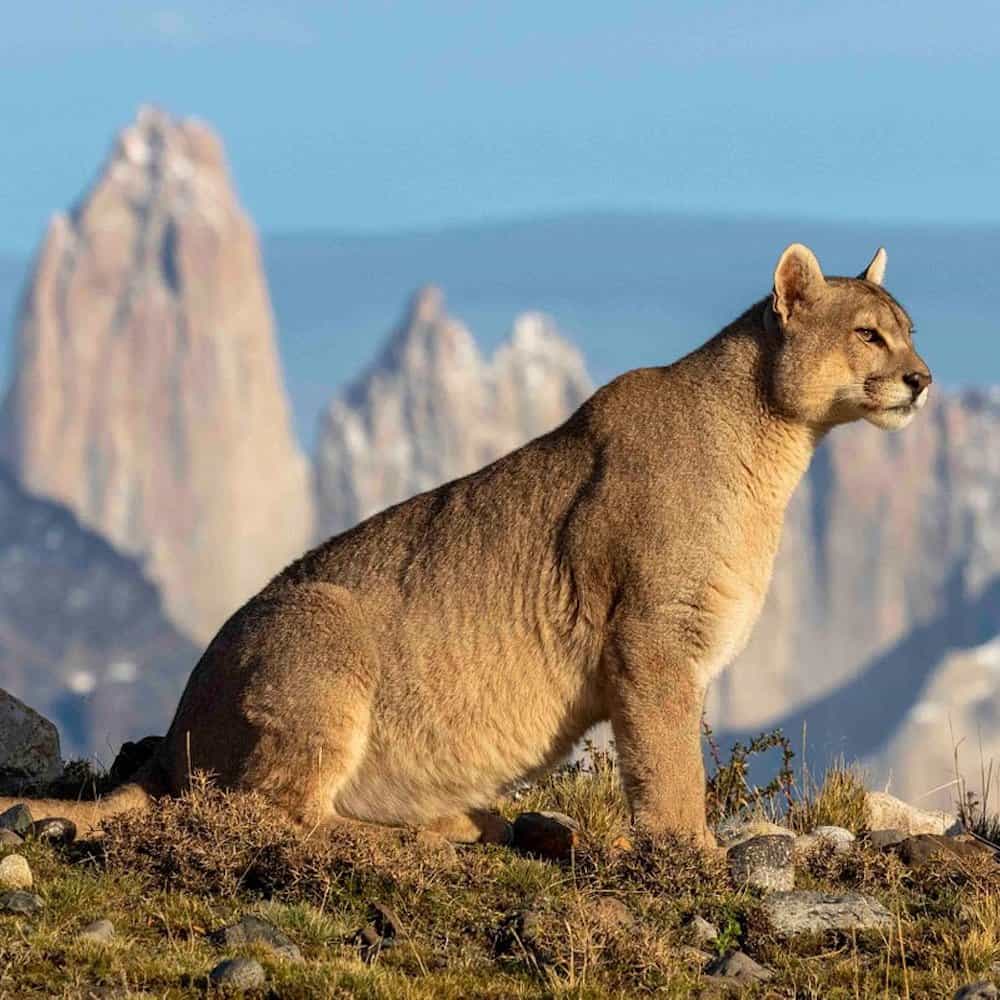
The diversity of environments described above, along with vast areas free from human disturbance, supports a remarkable quantity and variety of wildlife. The park is home to around 126 bird species, representing 28% of Chilean bird species, and 25 mammal species, which account for 70% of the country’s total. Notable species include mammals such as the puma, huemul deer, guanaco, and Culpeo fox.y chilla, gato de Geoffroy, chingue, quirquincho, además de aves como ñandú, cóndor, águila mora, flamencos, gansos silvestres, carpinteros, cachañas y una gran diversidad de aves acuáticas.
THE CHALLENGE
Fire has been a constant presence throughout the history of Torres del Paine National Park. Reconstructions of fire impacts by various researchers—analyzing micro- and macroscopic charcoal particles—suggest that fire has been a continuous disturbance factor in these ecosystems over the last 13,000 years.
However, in terms of scale, the last major wildfire—and the largest in Torres del Paine since its designation as a protected area—occurred in late 2011. It affected over 17,000 hectares, of which an estimated 59.7% consisted of Patagonian steppe dominated by grasses, 28.6% scrubland or shrubby steppe, 9.7% native forest, and the remaining 1.9% other land uses (INFOR, 2011; CONAF, 2012; USNPS, 2012).
OUR WORK
In the wake of this ecological disaster, Reforestemos Patagonia (now Fundación Reforestemos) was born as a citizen movement aiming to restore part of the centuries-old lenga forests devastated by the flames. Thus, in 2012, we launched our first native species reforestation project in Torres del Paine National Park—a partnership renewed in 2025 and 2026 with the planting of an additional 21,000 trees.
Planting
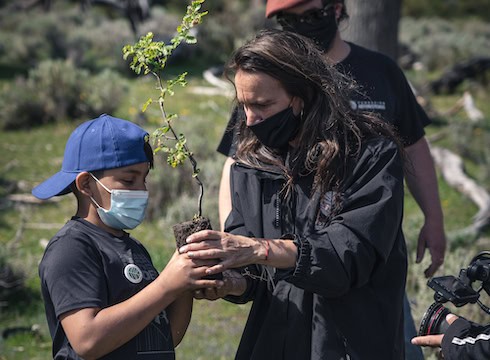
Planting of 44,400 Nothofagus pumilio (lenga) seedlings produced in Puerto Natales across different sectors of Torres del Paine National Park, implementing non-traditional planting methodologies and utilizing various herbivore protection methods.
Weed Control
Removal and/or reduction of vegetation competing with the species to be established, preventing competition for water, light, and nutrients. This activity is essential for the successful establishment and growth of the plantation.
Monitoring
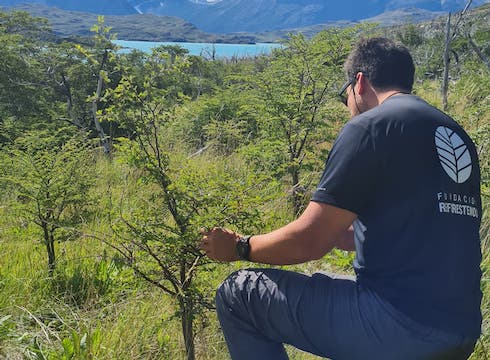
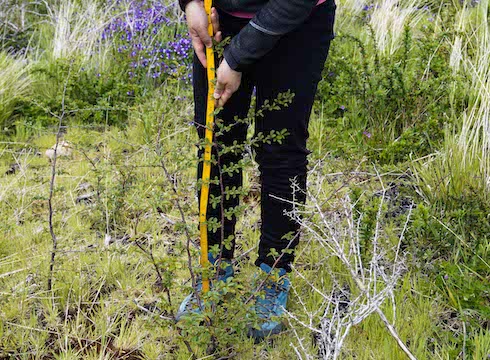
As in all our projects, monitoring was carried out during the first five years of reforestation to measure plant survival rates and check the condition of protective guards and fences. Today, our lenga trees stand nearly 2 meters tall with a survival rate of over 75%, ready to form a new native forest.
Volunteer Programs
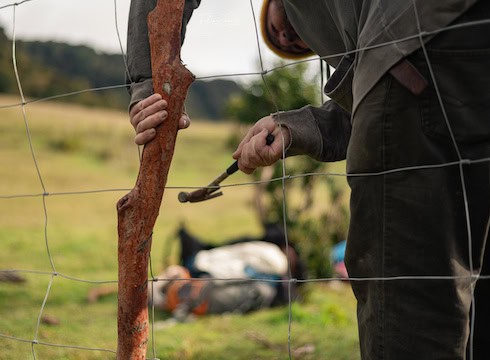
The importance of keeping forested areas properly enclosed with perimeter fences lies in the fact that plants can be browsed and trampled. Our reforestation was carried out in three sectors of the park: Grey – Pehoe Zone, Pehoe Campground / Condor Viewpoint Zone, and Explora – Weber Zone. In the latter, perimeter fences originally built by CONAF in 2005–2006—a significant percentage of which were burned during the last wildfire—were repaired and upgraded.
¿Por qué colaborar con nosotros?
Invierte con tu empresa en acciones concretas por el planeta
¿Por qué colaborar con nosotros?
Invierte con tu empresa en acciones concretas por el planeta
¿Por qué colaborar con nosotros?
Invierte con tu empresa en acciones concretas por el planeta
¿Por qué colaborar con nosotros?
Invierte con tu empresa en acciones concretas por el planeta
¿Por qué colaborar con nosotros?
Invierte con tu empresa en acciones concretas por el planeta
¿Por qué colaborar con nosotros?
Invierte con tu empresa en acciones concretas por el planeta
¿Por qué colaborar con nosotros?
Invierte con tu empresa en acciones concretas por el planeta
¿Por qué colaborar con nosotros?
Invierte con tu empresa en acciones concretas por el planeta
¿Por qué colaborar con nosotros?
Invierte con tu empresa en acciones concretas por el planeta
¿Por qué colaborar con nosotros?
Invierte con tu empresa en acciones concretas por el planeta
¿Por qué colaborar con nosotros?
Invierte con tu empresa en acciones concretas por el planeta
¿Por qué colaborar con nosotros?
Invierte con tu empresa en acciones concretas por el planeta
¿Por qué colaborar con nosotros?
Invierte con tu empresa en acciones concretas por el planeta
¿Por qué colaborar con nosotros?
Invierte con tu empresa en acciones concretas por el planeta
¿Por qué colaborar con nosotros?
Invierte con tu empresa en acciones concretas por el planeta