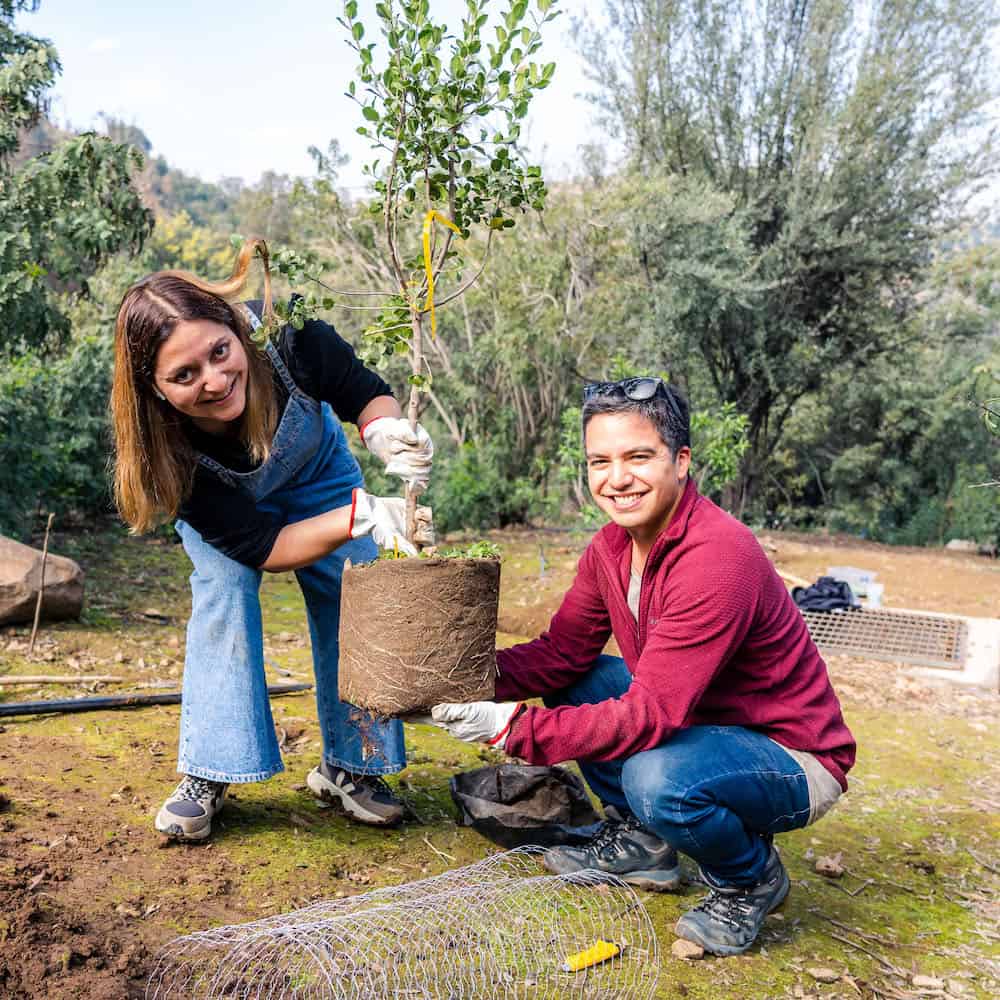
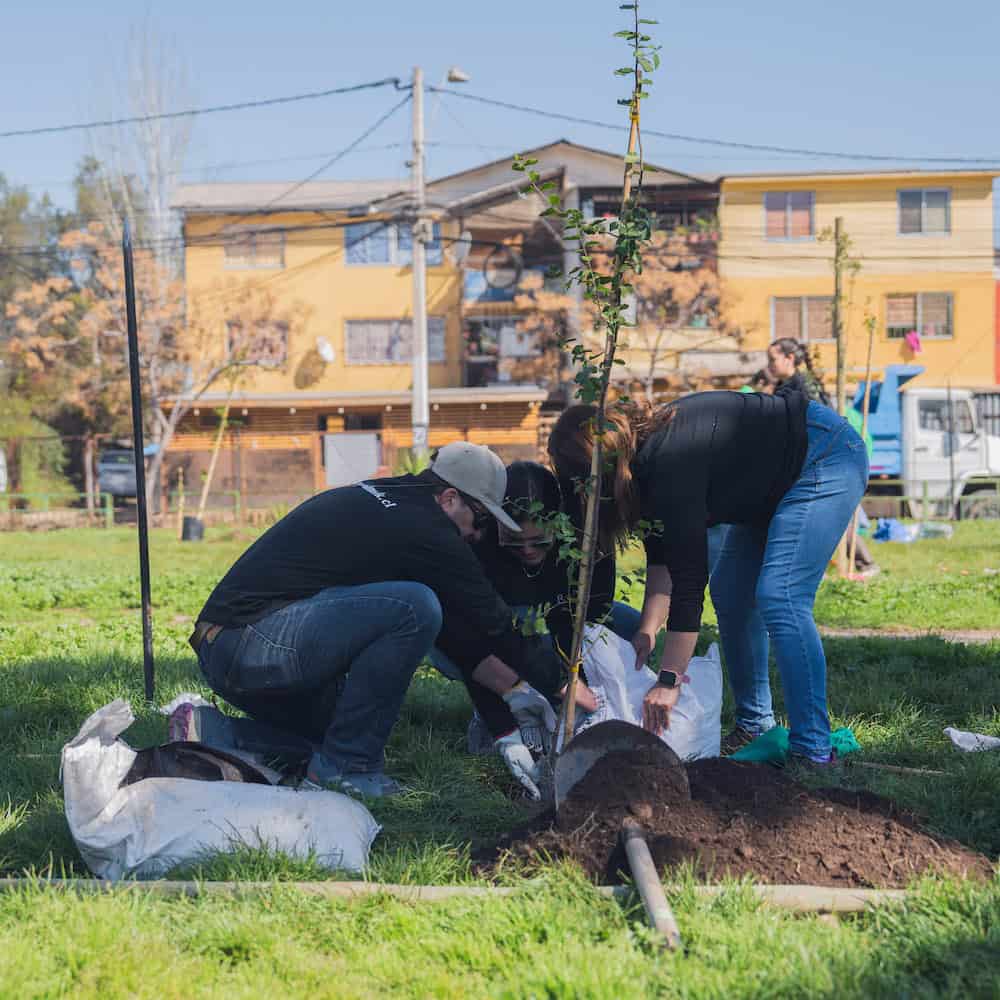
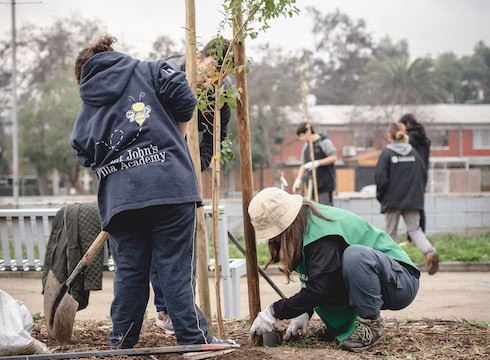
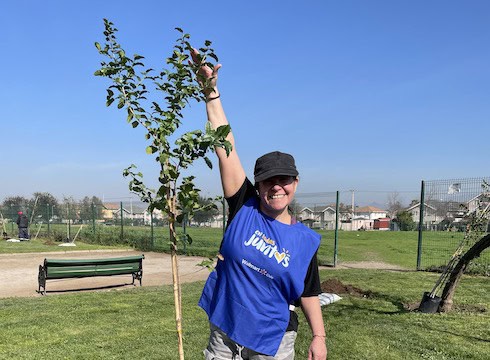
In 2018, with the goal of democratizing access to green spaces and improving people’s quality of life, we launched our Urban Forestry Program, extending our work to the restoration of green areas in underserved municipalities. Our approach not only provides local communities with all the benefits of urban trees, but also contributes to the revitalization of public spaces.
Context
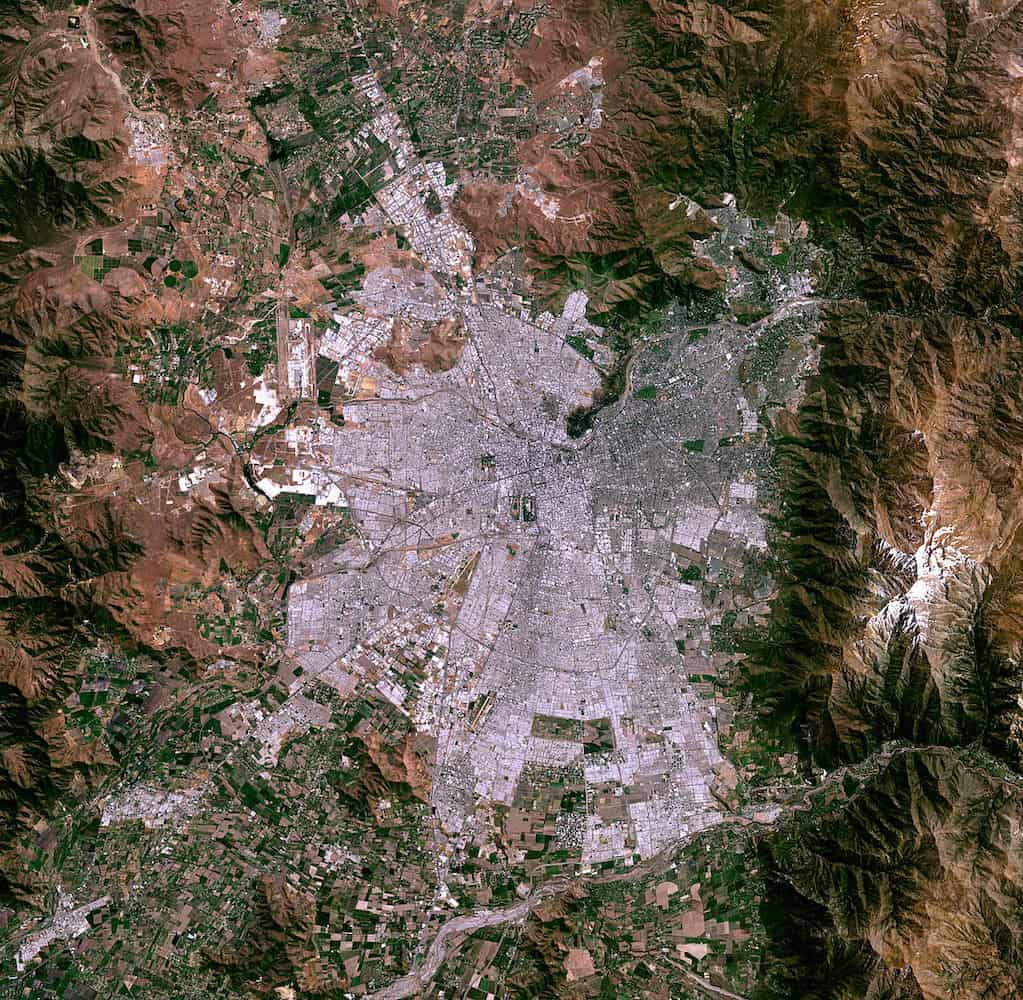
The green space gap in our country is alarming. For instance, in Greater Santiago, home to 40% of the population, only one-third of residents have access to squares or parks within 400 meters of their homes. Furthermore, a mere 5.7% have access to 10 square meters of green space per capita. Both metrics are standards defined by the National Council for Urban Development (CNDU). Source: UC Center for Public Policy.
This scenario is not an exception. Across the rest of the country, data shows that only 18 out of the 117 studied municipalities meet the standard of 10 square meters of green surface area per capita. At the other extreme, and far from meeting this goal (under 5 square meters per capita), are 7.6 million residents (SIEDU 2019).
This reality raises significant concerns when we consider the countless benefits that urban trees deliver to cities.
Environmental Benefits
Large trees are excellent filters for urban pollutants and fine particulate matter (such as dust, dirt, or smoke), trapping them within their leaves and bark.
The strategic placement of trees in cities can cool the air by 2°C to 8°C. For instance, properly positioning trees around buildings can reduce air conditioning needs by 30%.
A mature tree can absorb up to 150 kg of greenhouse gases per year. Consequently, trees play a vital role in climate change mitigation.
Mature trees regulate stormwater runoff and play a key role in preventing floods and reducing the risk of natural disasters. A mature evergreen tree, for example, can intercept more than 15,000 liters of water per year.
Trees are essential for boosting urban biodiversity, providing local flora and fauna with favorable habitats, food, and protection.
Source: UN-Habitat
Social Benefits
Urban green spaces provide areas for socializing and interaction among neighbors, fostering a sense of belonging and social cohesion within neighborhoods.
Living near and having access to urban green spaces can improve physical and mental health. UN-backed studies show that green areas are associated with lower levels of stress and depression, better pregnancy outcomes, and lower rates of cardiovascular disease, obesity, diabetes, and mortality.
Some academics argue that social segregation in our country manifests environmentally, as green spaces are unequally distributed across different socioeconomic groups.
Our Work
The impact of our Urban Forestry Program in figures since 2018.
Native Trees
0
providing 88,320 sq m of shade and 607,200 kg of oxygen every year once they reach maturity.
Municipalities Reached
0
distributed across the regions of Coquimbo, Antofagasta, Valparaíso, Maule, La Araucanía, and the Santiago Metropolitan Region.
Potential Residents Benefited
0
based on a 15-minute walking radius, calculated at a walking speed of 4 km/h.
Native Species
0
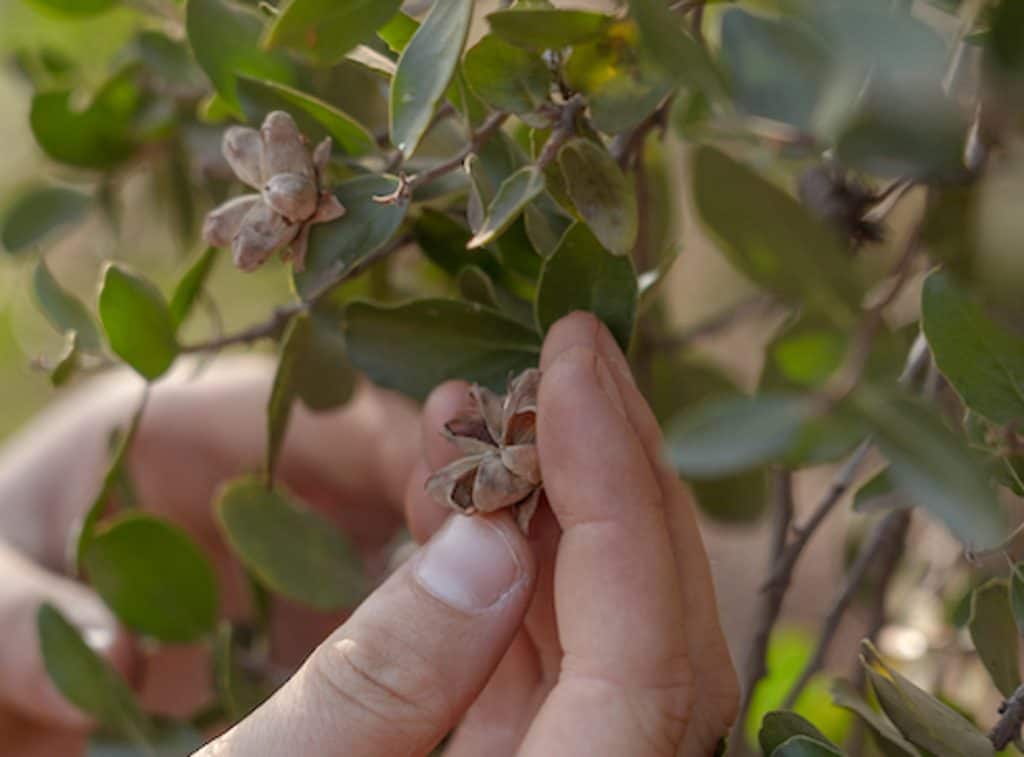
Belloto del Norte, Algarrobo, Sauce chileno, Algarrobo blanco, Quillay, Peumo, Maitén, Molle, Quebracho, Espino, Tara, Picha Picha, Luma, Mañío de hoja larga, Corcolén, Huingán, Mayu, Pimiento, Maqui, Colliguay, Avellano, Roble, Raulí, Temú, Arrayán, Canelo, Notro, Coihue and Chañar.
Highlights
In each of our projects, we are committed to working with native species that offer greater resilience to climate change, prolonged droughts, and lower water requirements.
In the Santiago Metropolitan Region, 80% of the trees are non-native, with the cherry plum (Prunus cerasifera) being the most abundant species.
Every tree we plant for our urban forestry projects stands between 2 and 3 meters tall.
Why Urban Forestry with Native Species?
In general, a high concentration of non-native species can diminish the ecological integrity of both the site and its surroundings—for instance, by invading natural environments near urban areas and displacing native species.
Furthermore, non-native trees tend to produce large amounts of pollen, creating a high airborne pollen load. This is because their primary reproductive mechanism is anemophilous (wind-pollinated), which can trigger allergic reactions in some individuals. In contrast, native species rely predominantly on local fauna for pollination, meaning they do not generate a high airborne pollen load.
¿Por qué colaborar con nosotros?
Invierte con tu empresa en acciones concretas por el planeta
¿Por qué colaborar con nosotros?
Invierte con tu empresa en acciones concretas por el planeta
¿Por qué colaborar con nosotros?
Invierte con tu empresa en acciones concretas por el planeta
¿Por qué colaborar con nosotros?
Invierte con tu empresa en acciones concretas por el planeta
¿Por qué colaborar con nosotros?
Invierte con tu empresa en acciones concretas por el planeta
¿Por qué colaborar con nosotros?
Invierte con tu empresa en acciones concretas por el planeta
¿Por qué colaborar con nosotros?
Invierte con tu empresa en acciones concretas por el planeta
¿Por qué colaborar con nosotros?
Invierte con tu empresa en acciones concretas por el planeta
¿Por qué colaborar con nosotros?
Invierte con tu empresa en acciones concretas por el planeta
¿Por qué colaborar con nosotros?
Invierte con tu empresa en acciones concretas por el planeta
¿Por qué colaborar con nosotros?
Invierte con tu empresa en acciones concretas por el planeta
¿Por qué colaborar con nosotros?
Invierte con tu empresa en acciones concretas por el planeta
¿Por qué colaborar con nosotros?
Invierte con tu empresa en acciones concretas por el planeta
¿Por qué colaborar con nosotros?
Invierte con tu empresa en acciones concretas por el planeta
¿Por qué colaborar con nosotros?
Invierte con tu empresa en acciones concretas por el planeta